Hot peppers, soy foods, and pumpkin seeds may help with hair loss.
Androgenic or androgenetic alopecia is one of the most common chronic problems seen by dermatologists. In men, it’s called male pattern hair loss, and in women, it’s called female pattern hair loss. It’s characterized by progressive hair loss, mostly of the central scalp. I’ve talked about hair-loss supplements and hair-loss drugs; what about foods for hair loss? What role might diet play in the treatment of hair loss?
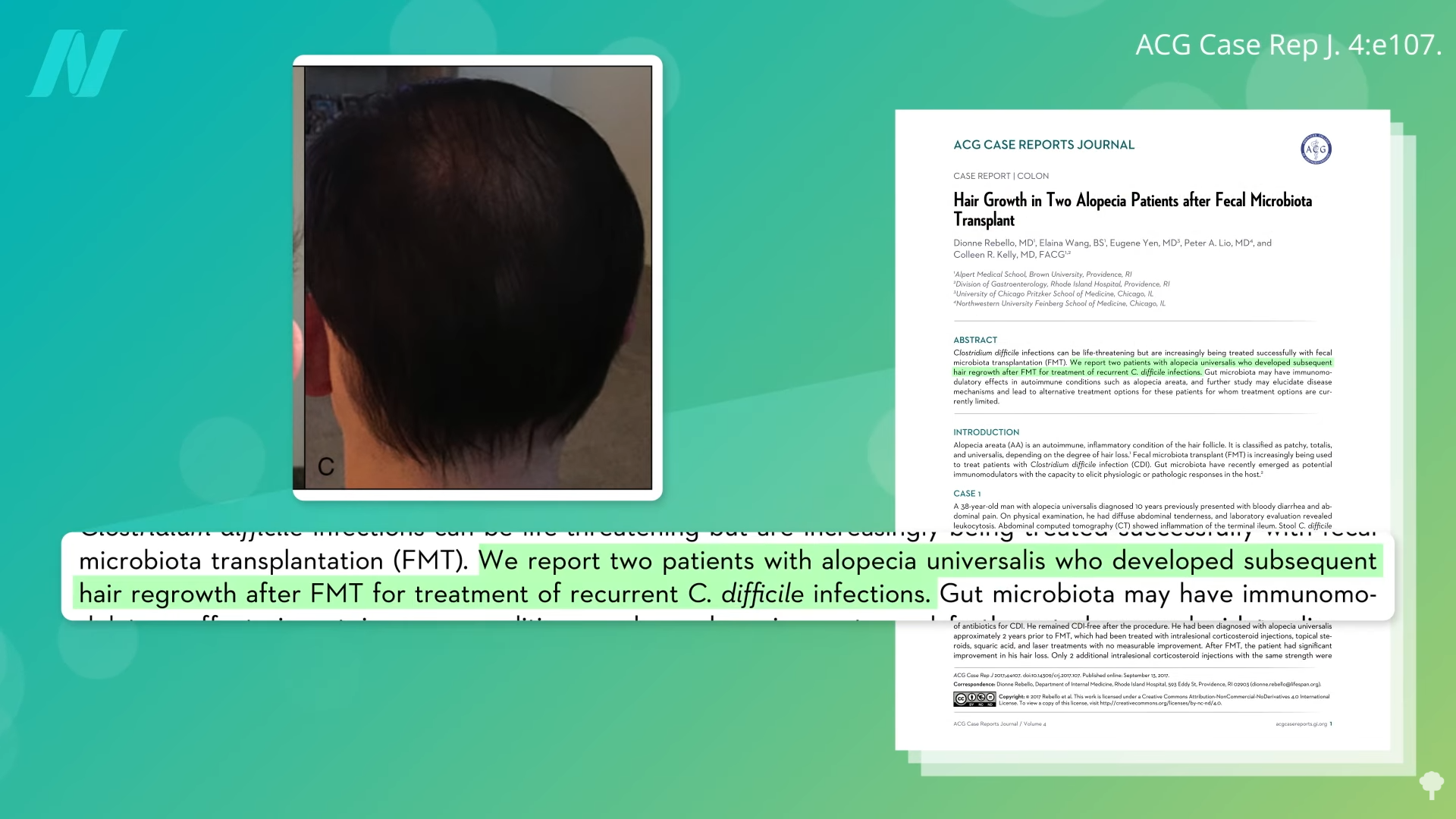
Human experiments with fecal transplants offer a clue to how powerful our microbiome is, with reports of improvements in hair loss after a “fecal slurry made from freshly passed stools” from a donor was administered into another person’s colon. These weren’t just subtle improvements. As you can see below and at 1:14 in my video Food for Hair Growth, a totally bald guy started growing back hair a few months after a fecal transplant.
A little more than a year later, his hair had completely regrown, as you can see below and at 1:18.
The moral of the story is not to drink brown smoothies, but to keep your good gut bugs happy.
Population studies have found that male pattern baldness is associated with poor sleeping habits and the consumption of meat and junk food; whereas protective associations were found for the consumption of raw vegetables and fresh herbs, as well as frequently consuming soymilk. Drinking soy beverages on a weekly basis was associated with 62% lower odds of moderate to severe hair loss, raising the possibility that there may be protective compounds in plants.
Complementary and alternative medicine treatments “boast the ability to ‘cure’ hair loss ‘safely’ with ‘less side effects’ than conventional medicine. However, it is important…to look beyond the overarching claims and marketing to critically review the literature.” For example, many studies have little relevance because the evidence was obtained from shaved rodents. (Hey, let’s smear shaved mice with bee venom!) And even when researchers do clinical studies on actual people, sometimes there’s no placebo control, so there’s no way to know if the food had anything to do with the results.
But there has been a randomized, double-blind, placebo-controlled study of compounds in hot peppers and soy, showing significantly higher promotion of hair growth. Below are some before-and-after pictures of both men and women, which you can also see at 2:49 in my video.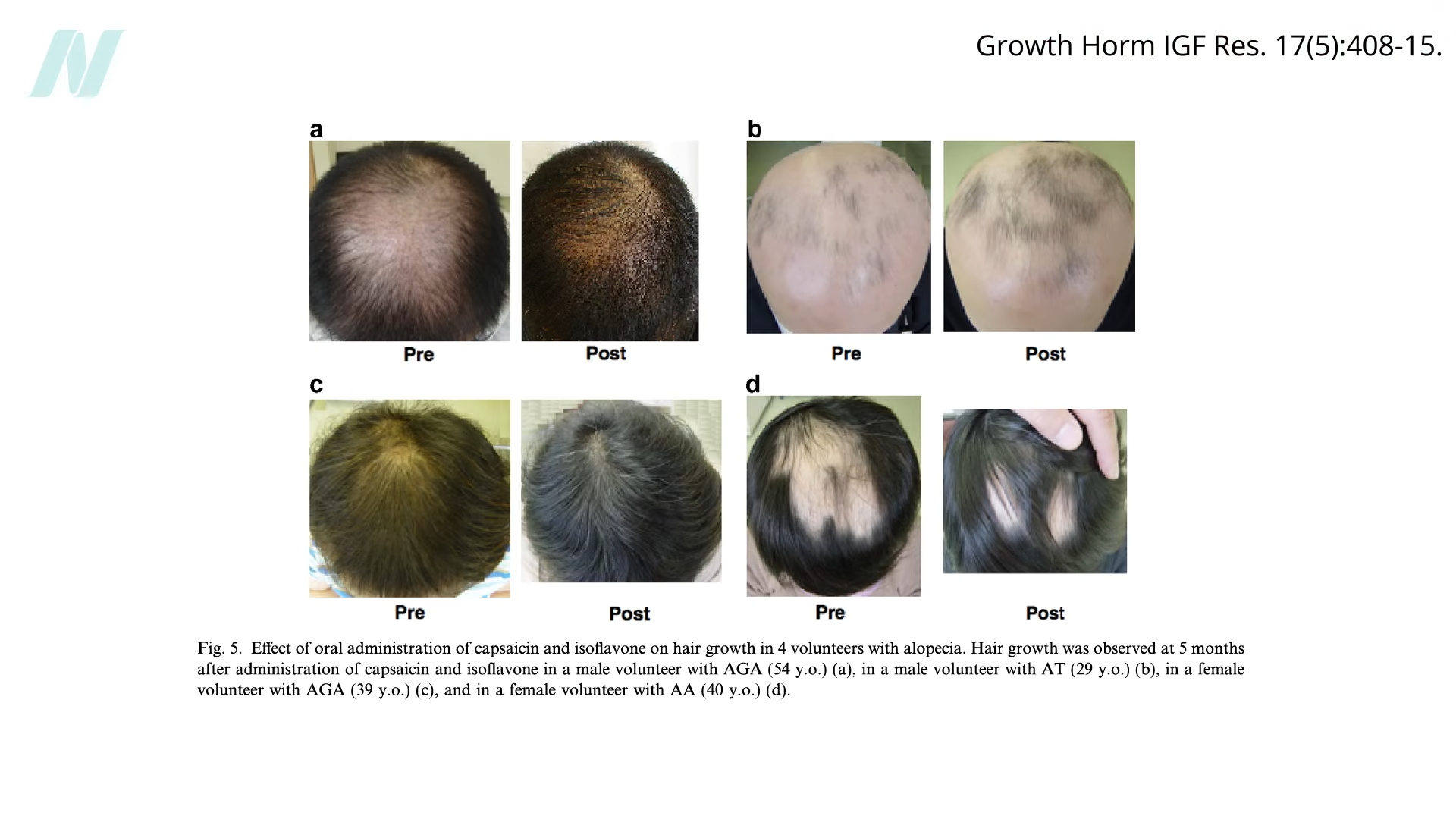
What doses were they taking? They took 6 milligrams of capsaicin a day and 75 milligrams of isoflavones. What does that look like in real food? You can get 6 milligrams of capsaicin in just a quarter of a fresh jalapeno pepper. That sounds pretty doable. You can get 75 milligrams of isoflavones by eating ¾ of a cup of tempeh or just straight soybeans. Soy nuts (dry-roasted soybeans) are even more concentrated, but given the formation of advanced glycation end-products in high-fat, high-protein foods prepared at high temperatures, I’d suggest avoiding routinely eating roasted or toasted nuts, seeds, or soy.
There’s also been a randomized, double-blind, placebo-controlled trial of pumpkin seed oil. Where did that idea come from? In 2009, a study out of South Korea found that randomizing men with BPH—benign prostatic hyperplasia, also known as enlarged prostate glands—to just 320 milligrams of pumpkin seed oil a day (that’s about a 16th of a teaspoon, so just a few drops a day) improved urinary flow rates. Urinary flow continued to kink off and decline in the control group, but those taking the equivalent of eating just two single pumpkin seeds a day saw a significant improvement, as you can see below and at 4:18 in my video.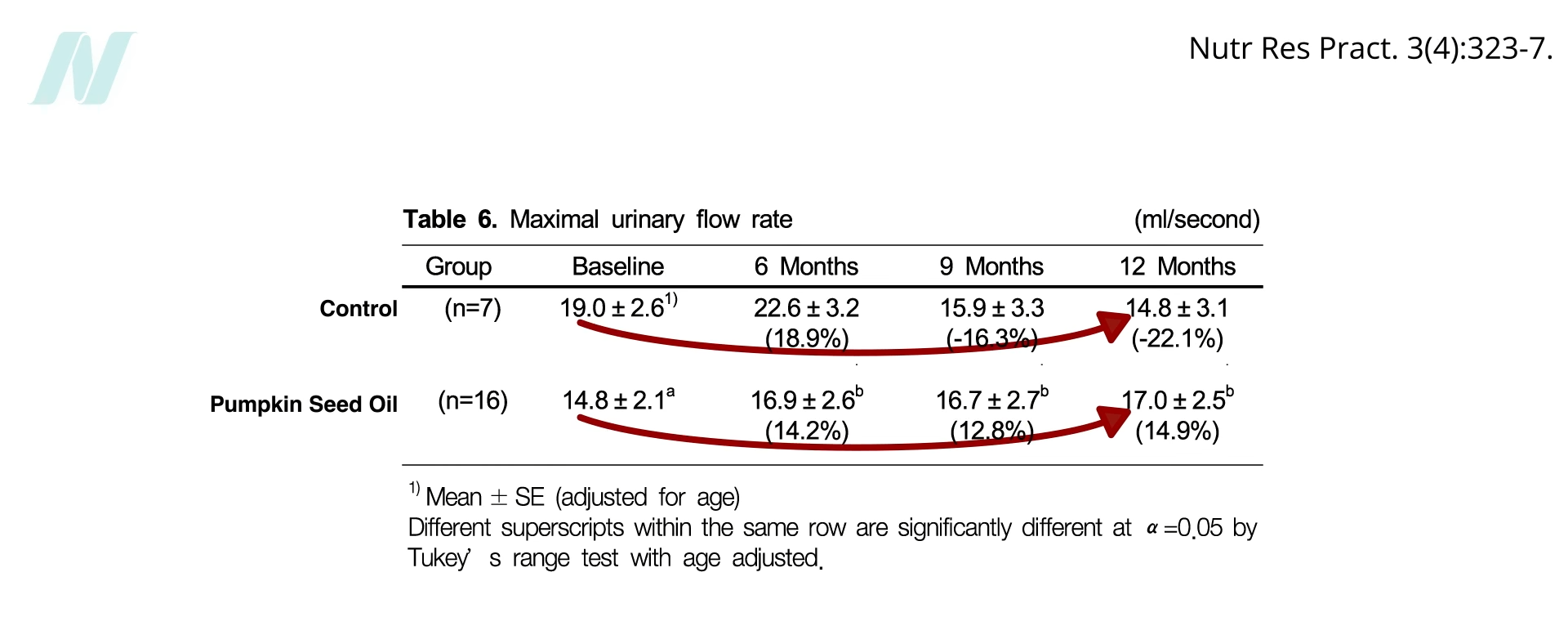
That would seem to be an anti-androgen effect, so maybe it would help with hair loss. It seems to work in mice when used topically, but what about in people just eating pumpkin seeds? Sadly, we often throw away pumpkin seeds, squash seeds, watermelon seeds, and they actually have a “rich repertoire” of nutrition. But you don’t know if they actually work for hair loss until you put them to the test.
In a study, 76 men with male pattern baldness received either 400 milligrams of pumpkin seed oil a day hidden in capsules or placebo capsules for a few months. (Again, 400 milligrams is like eating two or two and a half pumpkin seeds a day.) The researchers measured scalp hair growth with all sorts of objective and subjective measures, and after 24 weeks of treatment, self-rated improvement and satisfaction scores in the pumpkin seed oil group were higher, and they objectively had more hair—a 40% increase in hair counts compared to only 10% in the placebo group. Below are some representative before-and-after shots of the improvement in hair coverage on two and a half pumpkin seeds’ worth of daily oil, which you can also see at 5:25 in my video.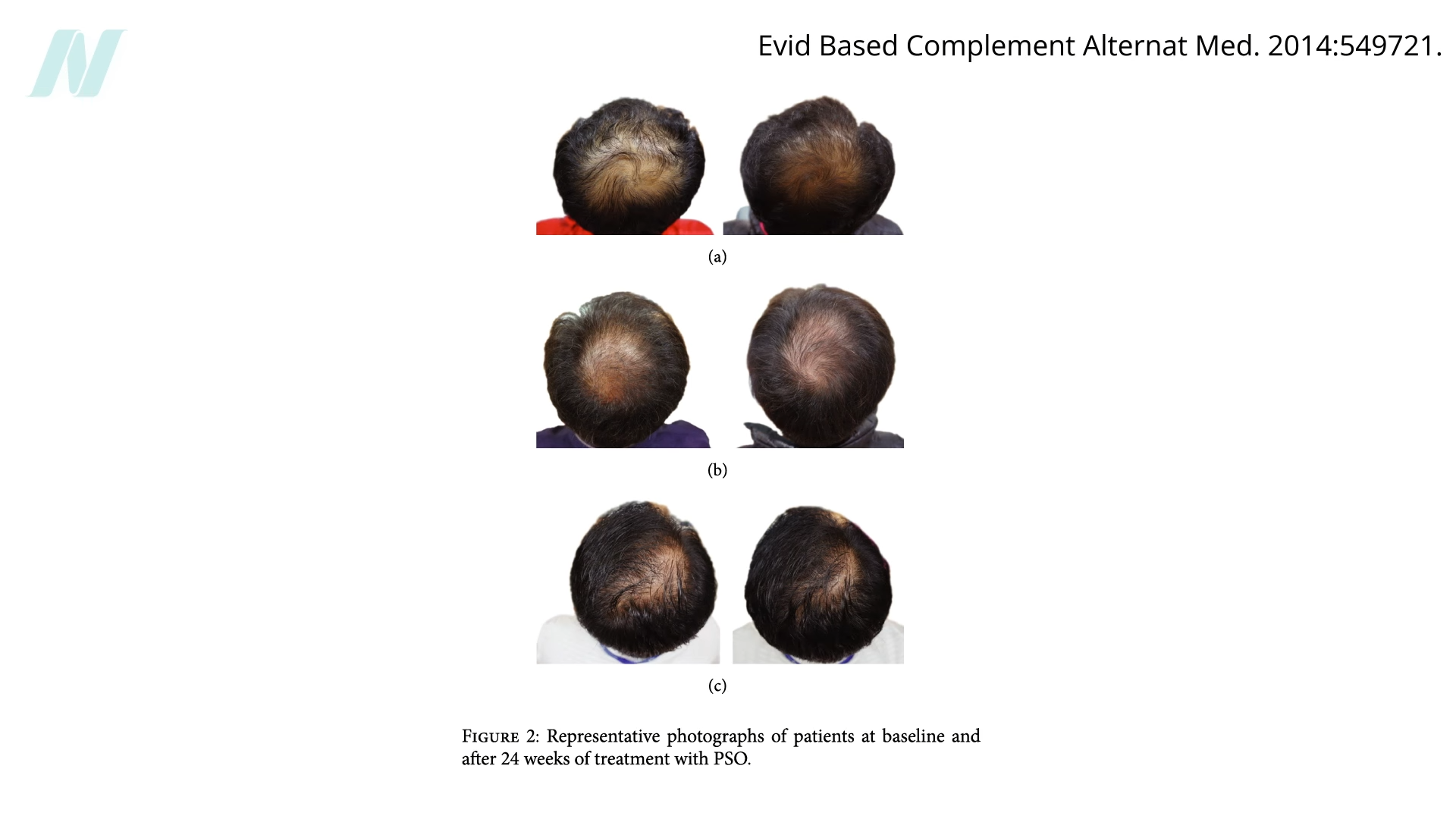
Show those pictures to investigators blinded to group assignment, and they rate the placebo groups as getting slightly worse over time but the pumpkin seed oil group getting significantly better. In the pumpkin seed oil group, 95% were rated as either unchanged or improved, whereas in the placebo control group, more than 90% were classified as unchanged or worsened. Given such a pronounced effect, might we be worried about sexual side effects? Researchers used an index of erectile dysfunction before and after the study and found no evidence of adverse effects.
Doctor’s Note
This is the last in a three-part series on hair loss and growth. The previous two blogs were Do Hair Growth Supplements Work? and The Benefits and Risks of Hair Loss Drugs.
A handful of pumpkin seeds would satisfy my Daily Dozen recommendation for nuts and seeds. See Dr. Greger’s Daily Dozen Checklist.